City Water · Orlando & Central Florida
What is really in your Orlando city water?
Your city does a lot right. The water that leaves the treatment plant meets every federal standard. But the plant is not the end of the story. Here is the full journey your water takes, where it stops being enough, and what that means for your family.
Is Orlando city water safe to drink?
Legally, yes. Orlando city water meets EPA standards for regulated contaminants, and the treatment plant protects you from the bacteria that once made tap water dangerous. But meeting the legal limit is not the same as being ideal. The water is still hard, it still carries chlorine at your tap, and it has tested above the federal limit for chlorine byproducts. Safe to drink and best for your family are two different bars.
From the ground to your glass
The journey your city water takes
Four stops between the aquifer and your kitchen sink. The water changes at every one.
It starts underground
Almost all Central Florida city water comes from the Floridan Aquifer. As that water moves through limestone, it picks up calcium and magnesium. That is why Orlando water is hard before anyone touches it.
The treatment plant cleans it
Your city utility disinfects the water, usually with chlorine or chloramine, to kill bacteria and viruses. They test it constantly and meet federal EPA rules. This part they do well.
Then it travels for miles
Clean water at the plant is not the same as clean water at your tap. It runs through miles of aging pipes. Chlorine keeps reacting along the way and forms byproducts. Older lines can add lead, rust, and sediment.
It arrives at your home
What reaches your faucet is hard, still carries chlorine and its byproducts, and may pick up more on the last stretch of pipe. Legal to drink, yes. Ideal for your family, not quite.
Credit where it is due
What city treatment plants do well
This is not a story about a broken city. The plant does its job. It just was never built to do everything.
They kill the dangerous stuff
Disinfection removes bacteria and viruses that once made tap water deadly. This is real public health protection and it works.
They test all the time
City utilities sample and report water quality on a strict schedule and publish a yearly report. The data is public and audited.
They meet federal limits
Your water legally meets EPA standards for regulated contaminants. The plant is doing its job inside the rules it is given.
Where it stops being enough
Why meeting the standard still is not enough
The plant works inside the rules it is given. Those rules leave real gaps between legal water and water you would choose for your family.
The legal limit is not zero
Orlando water has tested around 97 ppb for trihalomethanes. The EPA limit is 80 ppb. These are chlorine byproducts linked to long-term health concerns, and the limit is a ceiling, not a goal.
Hardness is not regulated at all
There is no federal limit on hardness. At 7 to 17 grains per gallon, Orlando water is very hard. That is the scale on your fixtures, the film on your skin, and the early wear on your appliances.
Chlorine stays in the water
The same chlorine that protects the water at the plant is still there at your tap. It is the pool smell, the taste your kids avoid, and the dryness after a shower.
Old pipes add what the plant removed
Lead and sediment can enter on the way to your home, after the plant has already done its testing. Some older Orange County areas have measured lead up to 7.89 ppb.
You absorb it, not just drink it
Studies estimate a large share of some contaminants enter the body through skin and steam during a hot shower. It is not only about what your family drinks.
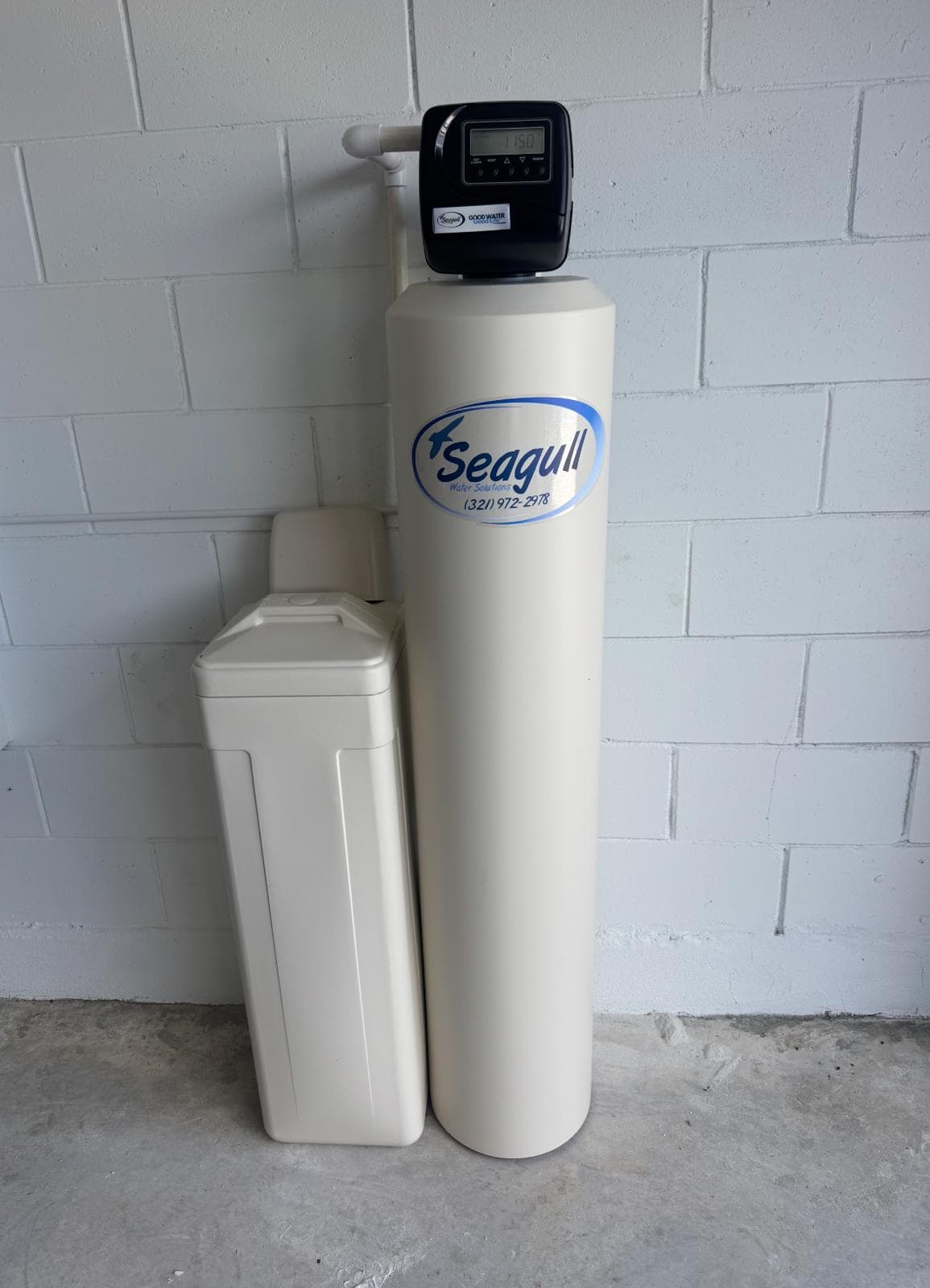
Where Seagull comes in
We finish what the city starts
The city makes your water legal and safe from bacteria. Seagull makes it soft, clean, and good to drink right at your home. We start with a free test of your actual water, then match the system to what your test shows. No guessing, no upsell.
Whole-house water softener
Removes the calcium and magnesium that make Orlando water hard. Treats every faucet, so scale stops building and showers feel soft again. It also helps water heaters and fixtures work cleaner and last way longer.
See water softenersReverse osmosis for drinking
Cleans up taste and reduces many contaminants at the kitchen tap. Crisp drinking and cooking water, no more cases of plastic bottles.
See reverse osmosisCity water, explained
Questions about Orlando city water
Is Orlando city water safe to drink?
Legally, yes. Orlando city water meets EPA standards for regulated contaminants. But meeting the legal limit is not the same as being ideal. The water is still hard, still carries chlorine, and has tested above the EPA limit for trihalomethanes. Safe to drink and great for your family are two different bars.
Why is Orlando water so hard?
Central Florida water comes from the Floridan Aquifer and moves through limestone, which adds calcium and magnesium. That makes the water hard before it even reaches the treatment plant. Orlando runs around 7 to 17 grains per gallon, which is classified as hard to very hard.
What are THMs and why do they matter?
Trihalomethanes are byproducts that form when chlorine reacts with natural material in the water. They keep forming as the water travels through pipes. Orlando has tested around 97 ppb, above the EPA limit of 80 ppb. They are linked to long-term health concerns, which is why many families filter them out.
If the city already treats the water, why do I need anything else?
The city protects the water from bacteria and meets federal rules, and that matters. But it does not soften the water, it does not remove chlorine at your tap, and it cannot control what old pipes add after the plant. A home system handles the part the city does not.
How do I know what is actually in my water?
Seagull tests your actual tap water in your home, for free. You see the hardness number and what is in it before anyone recommends a system. We read the results with you, no sales script.
See what is in your water for yourself
A free in-home water test shows you the real numbers for your address. We read them with you and explain your options in writing. No obligation, no pressure.
360 Wilshire Blvd #124, Casselberry, FL 32707On a private well instead? See our well water treatment.