Well Water · Central Florida
What is really in your Central Florida well water?
With a private well, there is no city plant between the ground and your family. No one disinfects it, and no one tests it but you. Here is what Florida well water usually carries, why the smell is only the part you can notice, and what to do about it.
Is Central Florida well water safe to drink?
Not automatically. A private well does not pass through a city treatment plant, so no one disinfects it or tests it but you. Florida well water often carries sulfur, iron, tannins, hardness, and a real risk of bacteria. It can look perfectly clear and still not be safe. The only way to know what is in your water is to test it.
Straight from the ground
What Florida well water usually carries
Four problems show up again and again in Central Florida wells. Some you can smell or see. One you cannot.
Sulfur, the rotten egg smell
That smell the second you turn on the shower is hydrogen sulfide gas. It is one of the most common Florida well problems. It is strongest in hot water, it can corrode plumbing, and it usually means there is more worth testing for.
Iron, the orange stains
Rust colored stains on sinks, tubs, toilets, and laundry come from iron, and Florida groundwater is full of it. It also leaves a metallic taste in your drinking water and your coffee.
Tannins, the brown water
Tea colored water comes from tannins, the natural material left by decaying leaves and roots in Florida soil. It is not always harmful, but it stains everything and gives the water an off taste and smell.
Bacteria, with nothing to stop it
A city plant adds chlorine to kill bacteria. A well does not. Nothing disinfects your water on the way to the tap, and nobody samples it on a schedule. The water can look perfectly clear and still carry what you cannot see.
A well is a good thing to own
This is not a story about a bad well. Owning a well has real advantages. It just was never meant to deliver finished water on its own.
It is your own supply
No monthly water bill and no city restrictions. The water comes straight from the Floridan Aquifer under your land, and that independence is a real reason people love well living.
No added city chemicals
Your well water never gets the chlorine or chloramine that city utilities add. That sounds like a win, and in one way it is. But it also means nothing is killing bacteria for you.
It can be excellent water
Treated correctly, well water can be some of the best water in your home. The minerals are natural. The catch is that raw well water is not finished water, and only a test shows what it needs.
Why natural is not the same as safe
With a well, no utility stands between the ground and your family. That puts five real gaps on your side of the line.
Natural does not mean tested
Coming from the ground does not make water clean. The same aquifer carries sulfur, iron, and tannins, and the soil can carry bacteria. Natural and safe are two different things.
Your well changes with the weather
Well chemistry shifts with rain, drought, and season. A test from two years ago does not tell you what is in the water today, which is why health agencies say to test at least once a year.
The smell and color are not the whole story
The sulfur smell and the orange stain are just the parts you can notice. Bacteria, certain metals, and nitrates have no smell, no color, and no taste. A real test looks past what your senses catch.
Your neighbor’s water is not your water
Two wells on the same street can have completely different chemistry depending on depth and location. What worked for a neighbor may be wrong for your home. Your well needs its own plan.
You are the treatment plant
With city water, a utility is responsible for what comes out clean. With a well, that responsibility is yours. Whatever your family drinks, showers in, and cooks with is on your side of the line.
Where Seagull comes in
We test your well first, then build around it
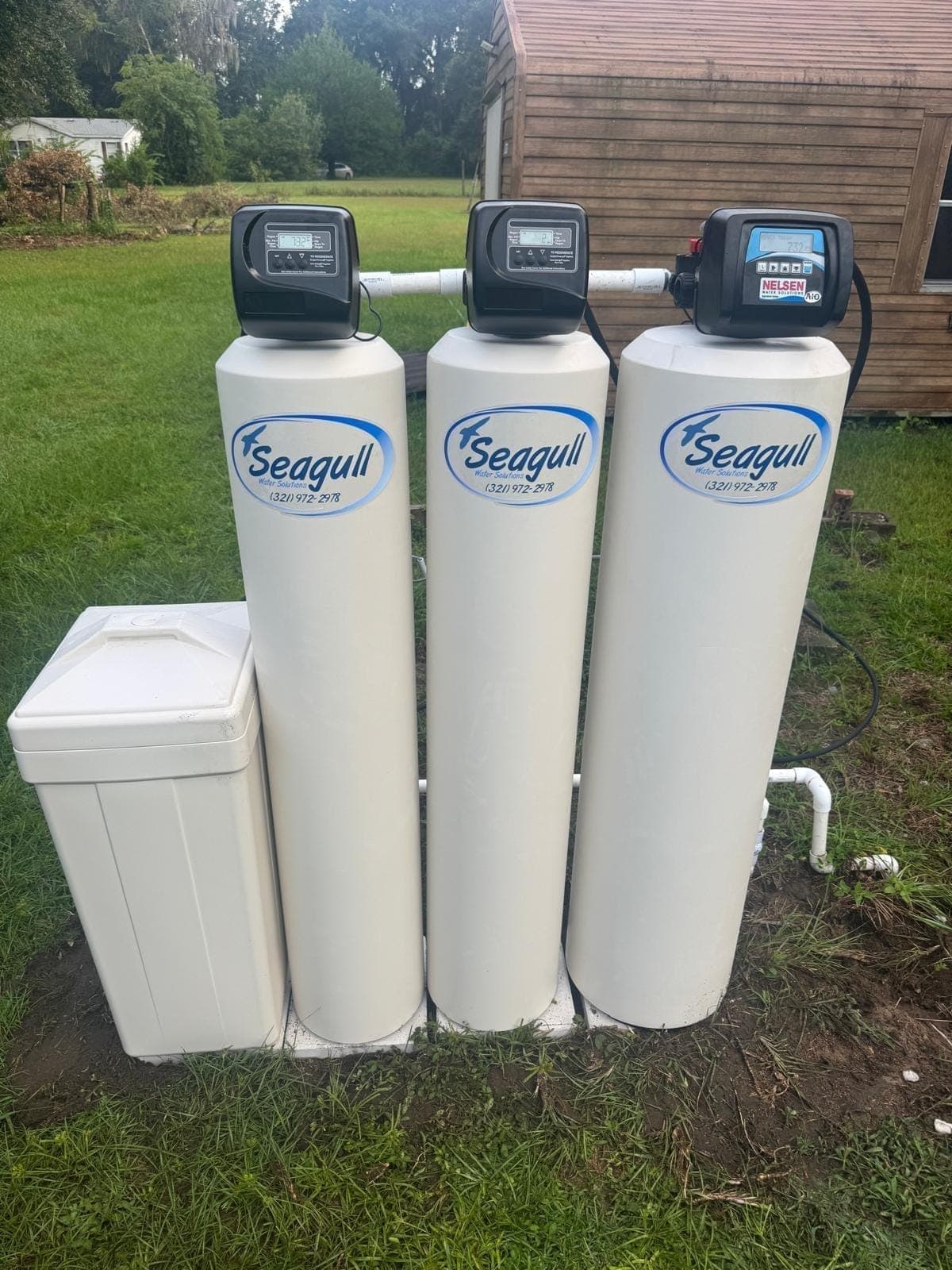
There is no one size fits all well system, because no two wells are the same. Seagull starts with a free test of your actual water, then designs treatment for what your well shows. Iron, sulfur, sediment, tannins, hardness, bacteria risk. No guessing, no upsell.
- Free in-home test of your real well water
- A system matched to your test, not a catalog
- One setup that protects every faucet and appliance
- We read the results with you, in plain language
Whole-home well water system
Built around your test results to handle iron, sulfur, sediment, tannins, hardness, and bacteria risk. One system that protects every faucet, shower, and appliance in the house.
See well water systemsOn city water instead?
If your home is on Orlando or Central Florida city water, the problems are different. See the full journey city water takes and where the plant stops being enough.
Read about city waterQuestions about Central Florida well water
Is Central Florida well water safe to drink?
Not automatically. A private well does not pass through a city treatment plant, so no one disinfects it or tests it but you. Florida well water often carries sulfur, iron, tannins, hardness, and a real risk of bacteria. It can look clear and still not be safe. The only way to know is to test it.
Why does my well water smell like rotten eggs?
That rotten egg smell is hydrogen sulfide gas, common in Florida wells. It often shows up strongest in hot water and in the shower. It is unpleasant, it can corrode plumbing over time, and it usually points to other things worth testing for. The right filtration removes it.
Why does my well water stain everything orange?
Orange and rust colored stains on sinks, tubs, toilets, and laundry come from iron in the water. Florida groundwater is often high in iron. It can also leave a metallic taste. A well system designed for your iron level clears the stains and the taste.
Why is my well water brown or tea colored?
A brown or tea color usually comes from tannins, which are natural organic material from decaying leaves and roots in Florida soil. Tannins are not always harmful, but they stain and give the water an off taste and smell. They need specific treatment, not a basic filter.
How often should I test my well water?
Health agencies recommend testing private wells at least once a year, and sooner if the taste, smell, or color changes, after flooding, or if anyone in the home gets sick. Well chemistry shifts with rain and season. Seagull tests your well for free and reads the results with you.
Sources used on this page
See what your well is really giving your family
A free in-home well test shows you the real numbers for your water. We read them with you and explain your options in writing. No obligation, no pressure.
360 Wilshire Blvd #124, Casselberry, FL 32707On city water instead? See what is in your Orlando city water.